

By MATTHEW GIBBONS, staff
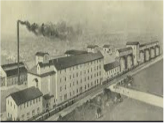
(Above)The Schuyler Flour Mill- archival photo.
SCHUYLER, Neb. (December, 2025)— In the late eighteenth and early nineteenth centuries, Schuyler, Nebraska, was home to the largest flour mill west of the Missouri River.
The mill played a major role in the town’s growth and economic success, serving as an industrial landmark originally owned by N. W. Wells.
First built on Shell Creek the mill was a water-powered operation. At the time, water power was one of the most common ways to operate mills, especially in areas where rivers and creeks were available.
However, as transportation and industry advanced, Wells recognized the importance of being connected to the railroad.
In 1882, the mill was moved from Shell Creek to Schuyler to take advantage of the railroad system, which allowed the mill to expand its reach and transport flour more efficiently to other towns, states and around the world.
Once relocated, the mill transitioned from water power to steam power, at a cost of approximately $100,000, or about $3.2 million today. This investment showed just how important the mill was to the region and how confident its owners were in its future success.
The Schuyler Flour Mill quickly became a cornerstone of the local economy, providing jobs for many residents and attracting new families and businesses to the area.
Farmers from across Colfax County and beyond brought their wheat to the mill, knowing it would be processed efficiently and sold at competitive prices. The mill’s success helped establish Schuyler as an important agricultural and industrial hub in Nebraska during that period.
Despite its importance, the flour mill was not immune to danger. Flour mills in the late nineteenth and early twentieth centuries were especially vulnerable to fires.
Flour dust is highly flammable, and even a small spark from machinery or steam equipment could cause a devastating explosion.
Wooden construction, open flames, and limited fire-safety technology made mills some of the most dangerous industrial buildings of their time.
When the Schuyler flour mill caught on fire, on Oct. 7, 1933, it shocked the community.
Flames spread rapidly through the structure, fueled by flour dust and wooden beams. Thick smoke could be seen from miles away as residents gathered to watch firefighters battle the blaze.
At the time, firefighting equipment was far less advanced than it is today, making it extremely difficult to control such a large and fast-moving fire. Many locals also feared that nearby buildings would catch fire, potentially causing even more destruction.
An estimated half a million gallons of water was poured on the fire, which prevented its spread to nearby residential areas. The fire caused significant damage to the mill and disrupted daily life in Schuyler.
Workers were suddenly out of jobs, and farmers lost a crucial place to process their grain. Businesses that relied on the mill also felt the impact, showing just how interconnected the town’s economy had become.
For many residents, the fire was not just the loss of a building, but the loss of a symbol of Schuyler’s hard work and growth.
Today, the story of the Schuyler flour mill remains an important part of local history.